“Ma’am, aage trek aur mushkil hone wala hai.” The trek ahead is going to get harder. Roseleen Sharma heard those words more than once on her way to Hampta Pass — and, looking back, she will tell you that the hardest part of a trek is rarely the mountain itself. It is the moment you begin wondering whether you can make it.
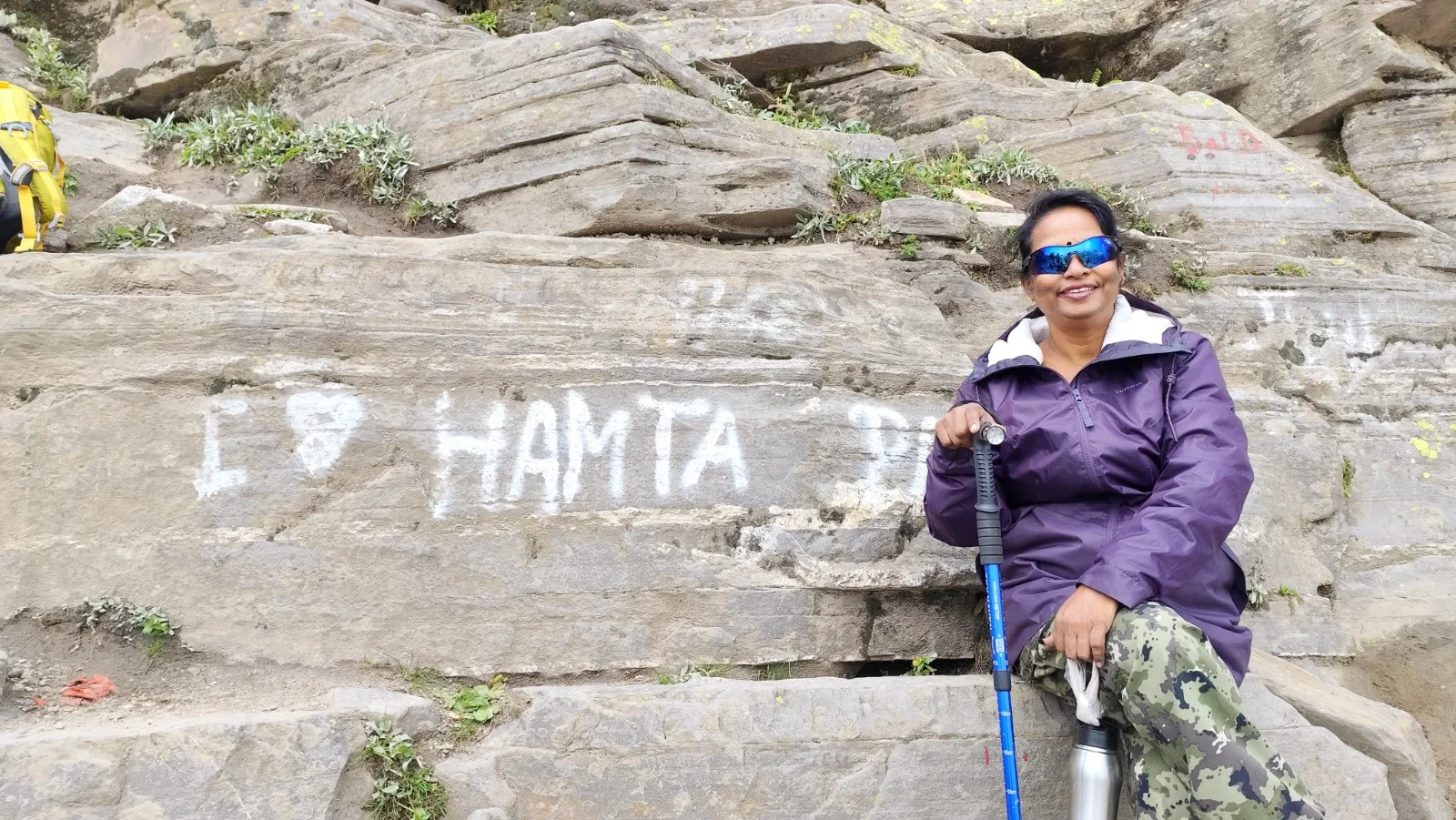
At 59, Roseleen had come to Manali with a simple plan: complete the Hampta Pass Trek with YaatraExpress, a five-day, four-night crossing from the green valleys of Kullu into the stark desert of Lahaul. What she didn’t know was that somewhere between the first climb and the final descent, it would become much more than another trek. It would become a quiet battle against doubt — other people’s, and, at times, her own.
She Wasn’t New to the Mountains
Roseleen had already seen her share of the Himalayas. She had been to Hemkund Sahib twice, walked through the Valley of Flowers, completed the Amarnath Yatra, and climbed from Tungnath to Chandrashila.
But one unfinished memory stayed with her. Eight or ten years earlier she had attempted Nag Tibba — a trek generally considered easier than Hampta Pass — and hadn’t been able to complete it. That memory is part of why Hampta Pass meant something different. This wasn’t only about reaching another destination; it was about finding out whether, this time, she could keep going.
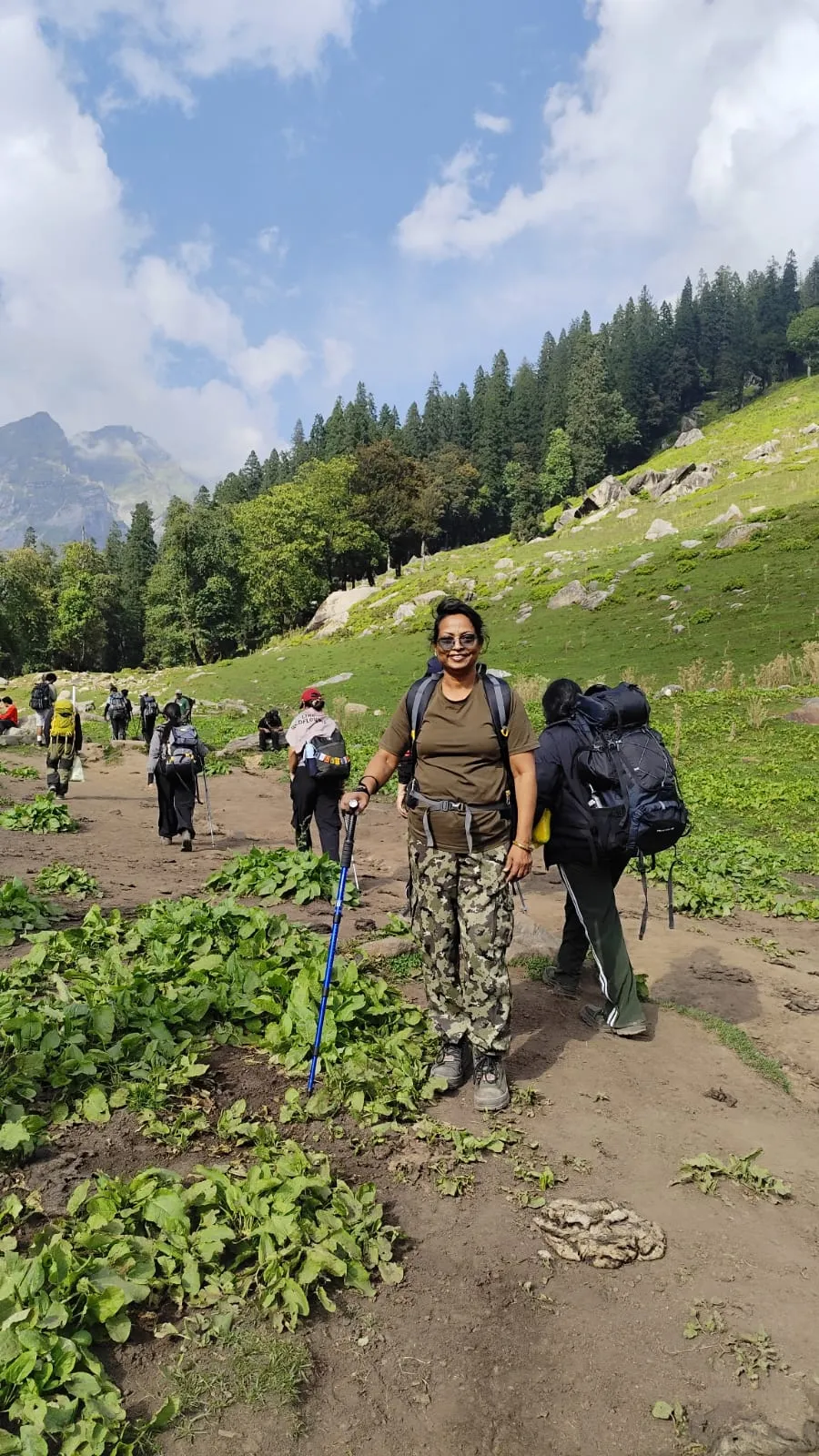
”Ma’am, Aage Mushkil Hai”
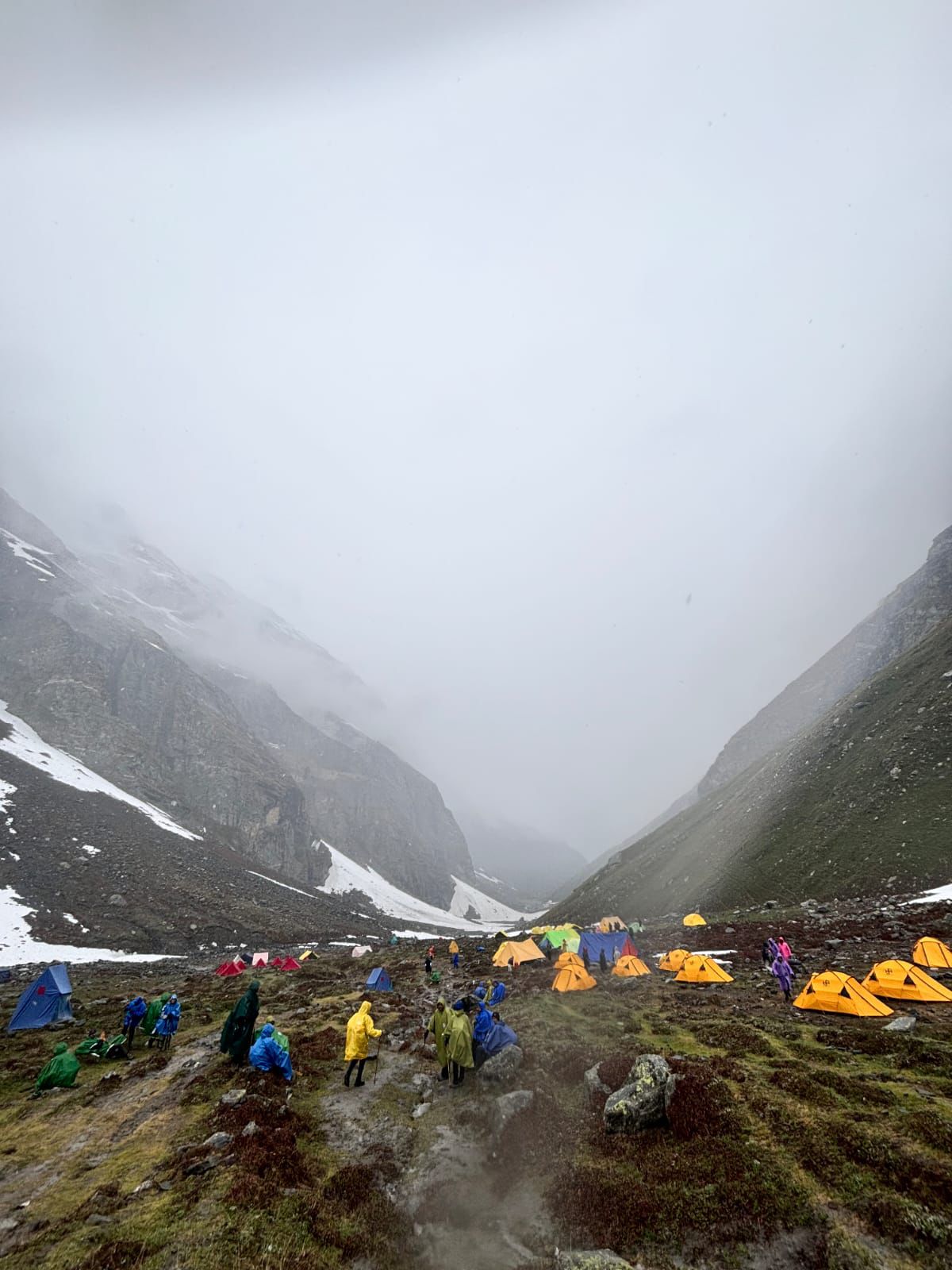
The trek began from Manali, and the first day was gentle. The group walked through meadows and forest towards Chika, and for Roseleen the trail felt comfortable. A rhythm settled in quickly: each morning the trekkers were told how far they would walk and where they would camp, and each evening they sat together to prepare for the next day.
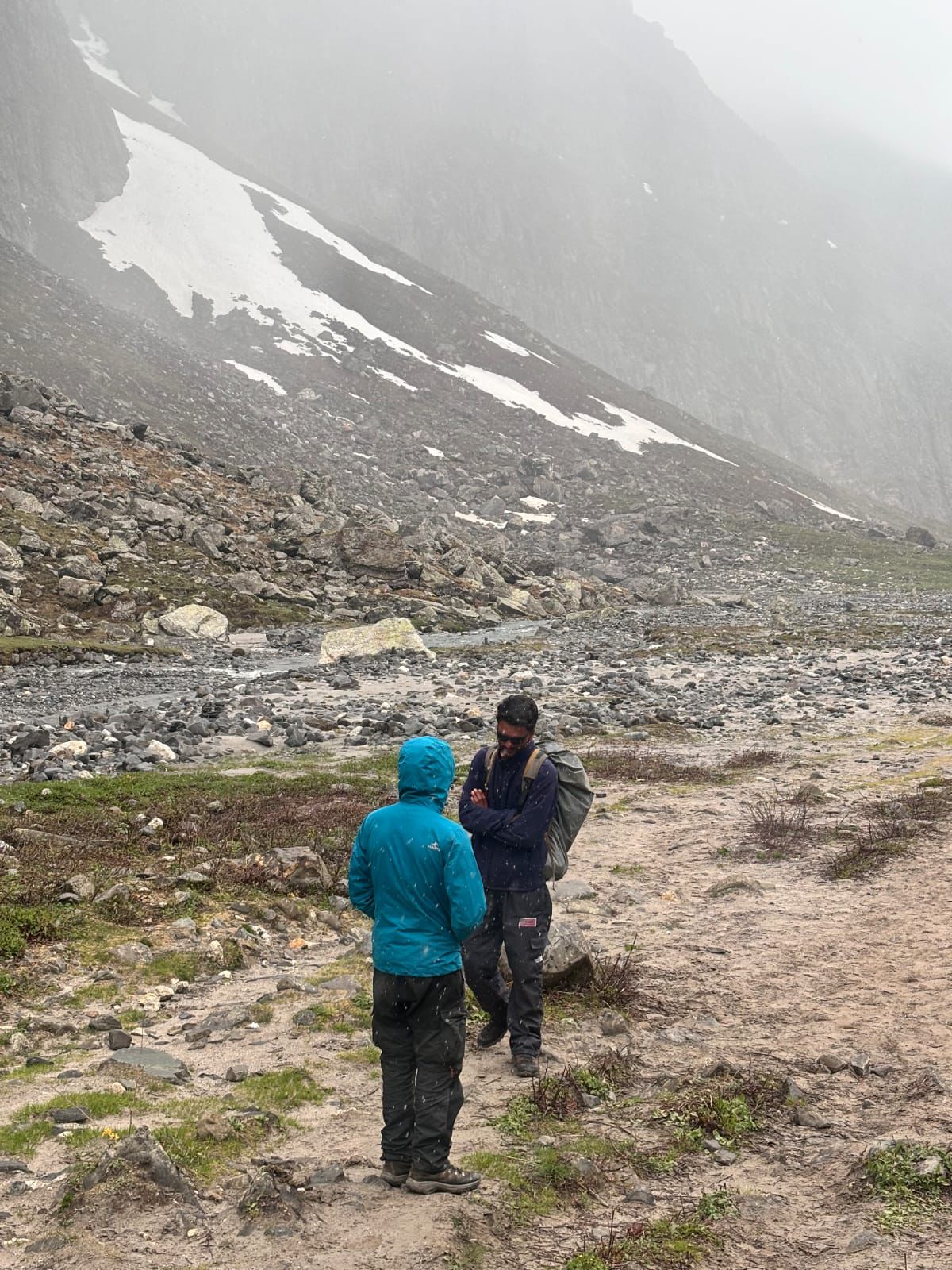
The two trek leaders, Vijay and Rana, kept a close eye on everyone, but Vijay was especially careful with Roseleen. She was 59, and the difficult section was still ahead. He warned her several times, and at one evening briefing the message became clearer still. The third day would be much harder. The greenery would thin out, the altitude would rise, and the further the group went, the harder it would be to turn back. Anyone who felt unsure could still return.
Roseleen listened carefully. She had seen some trekkers coming back down, and had even spoken to them. But nothing inside her said turn around. Her thought was surprisingly simple:
“Dekhte hain. Kitna mushkil hoga.”
Let’s see. How hard can it be?
So she continued.
The Woman Everyone Thought Might Fall Behind
The next stretch took the group to Balu Ka Ghera. That morning they had been told to expect a river crossing, and Roseleen kept waiting for it. A small stream appeared, but she wasn’t sure whether that was the crossing they had been warned about — and because she was worried about being left behind when the real one came, she started walking faster than she probably needed to.
Then something unexpected happened. Roseleen reached Balu Ka Ghera first. The trekker whose ability to handle the hard section had been quietly questioned had arrived ahead of everyone else.
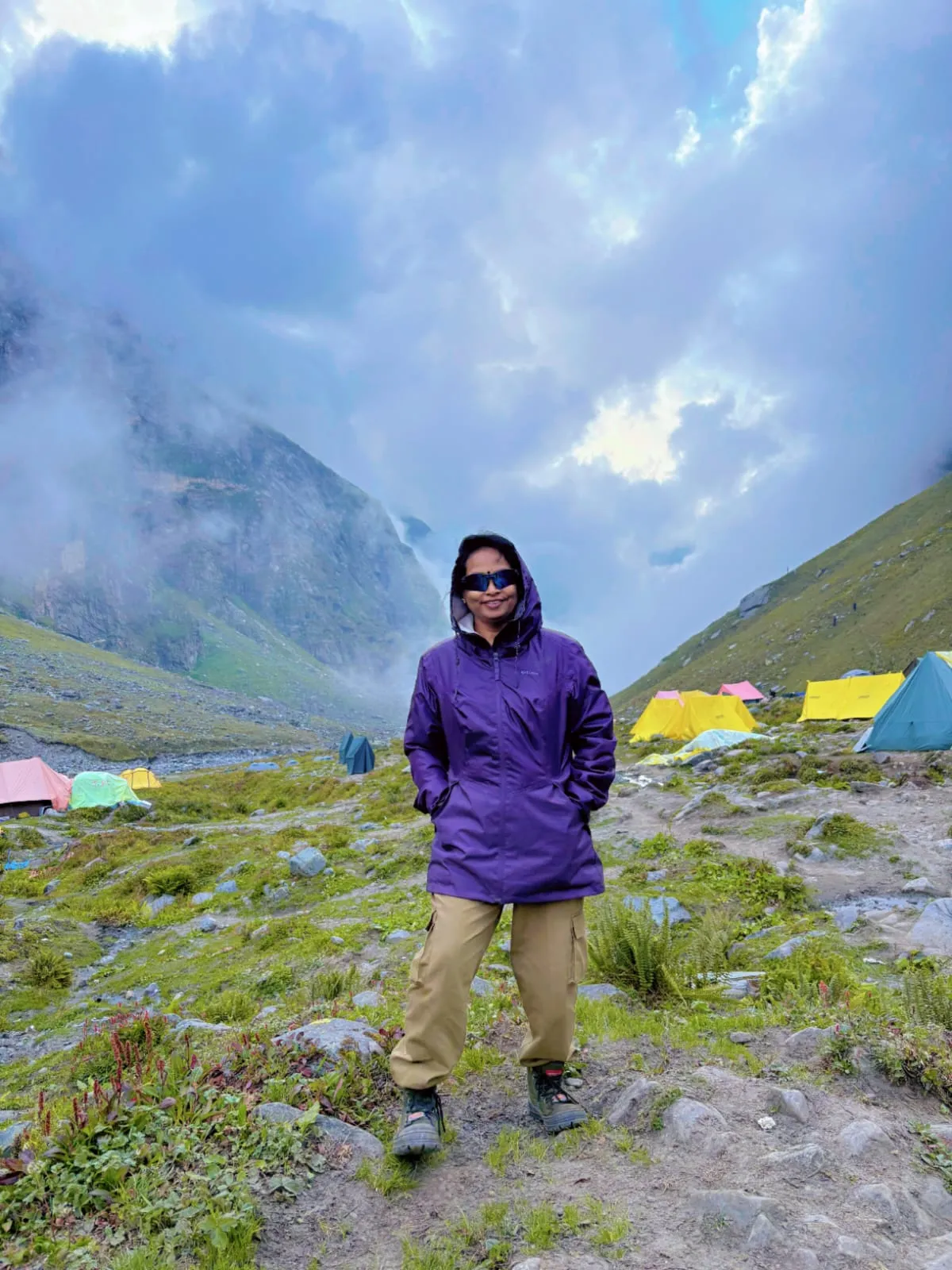
When Vijay saw her, he asked whether she needed any help. She didn’t. And what he said next changed something:
“Ma’am, aapko koi help nahi chahiye. Aap bilkul perfectly fit ho is trek ke liye.”
Ma’am, you don’t need any help. You are perfectly fit for this trek.
Until then, her age had been the reason for caution. Now her walking was speaking louder than her age.
Then the Trail Turned Steep
From Balu Ka Ghera, the route towards Hampta Pass is the most demanding part of the trek. For Roseleen, the challenge wasn’t breathing or the thinning air — it was the steep climb, which asked for effort, patience and one more step after another. She had faced a similar gradient on earlier treks, and that experience helped. Whenever she needed support, Vijay was beside her, and the group moved up together.
About a kilometre and a half below the pass, everyone stopped for lunch before carrying on. Vijay, wisely, never told Roseleen exactly how close they were, so she simply kept walking without knowing the top was near. And then, suddenly, they were there.
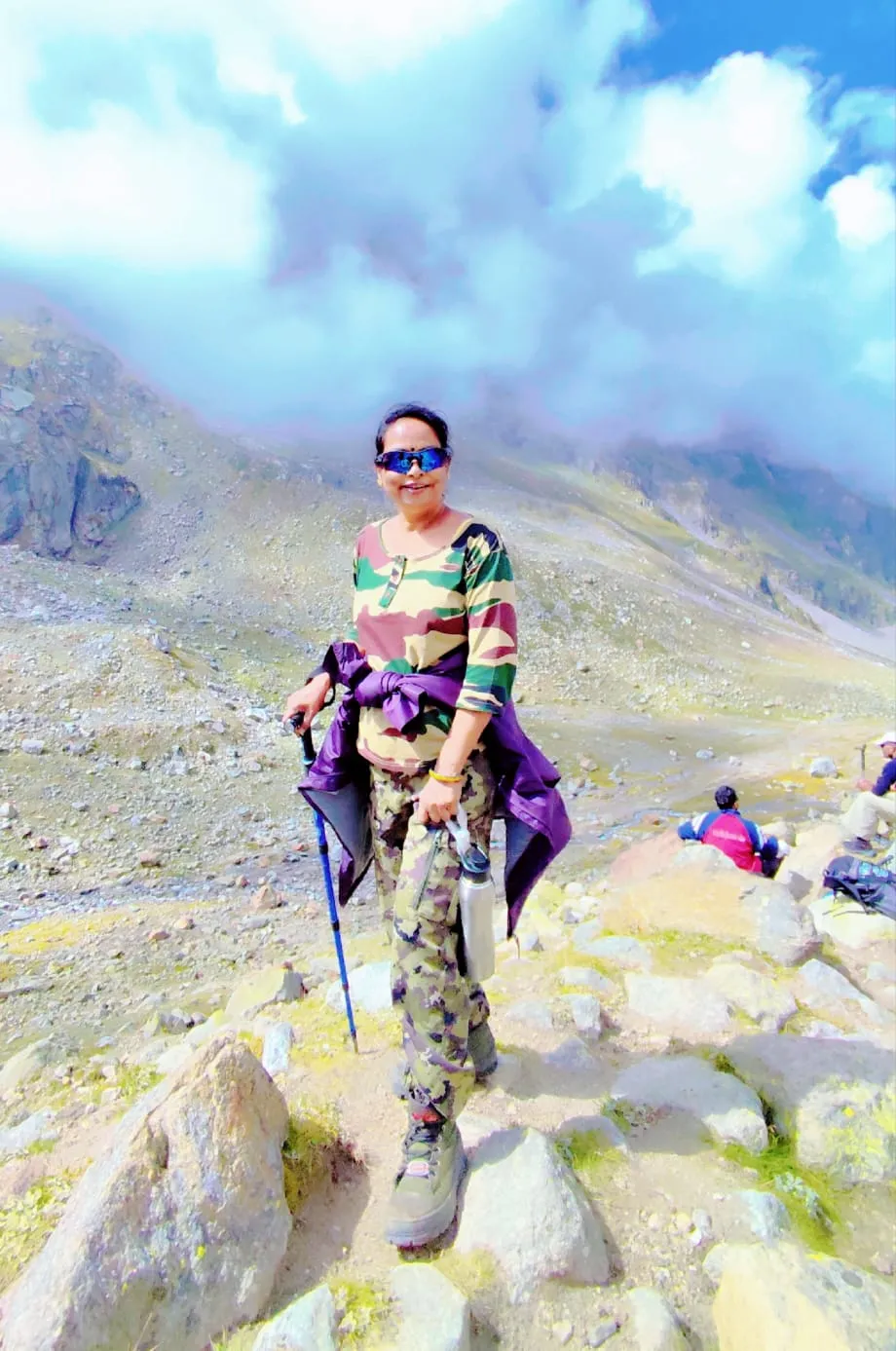
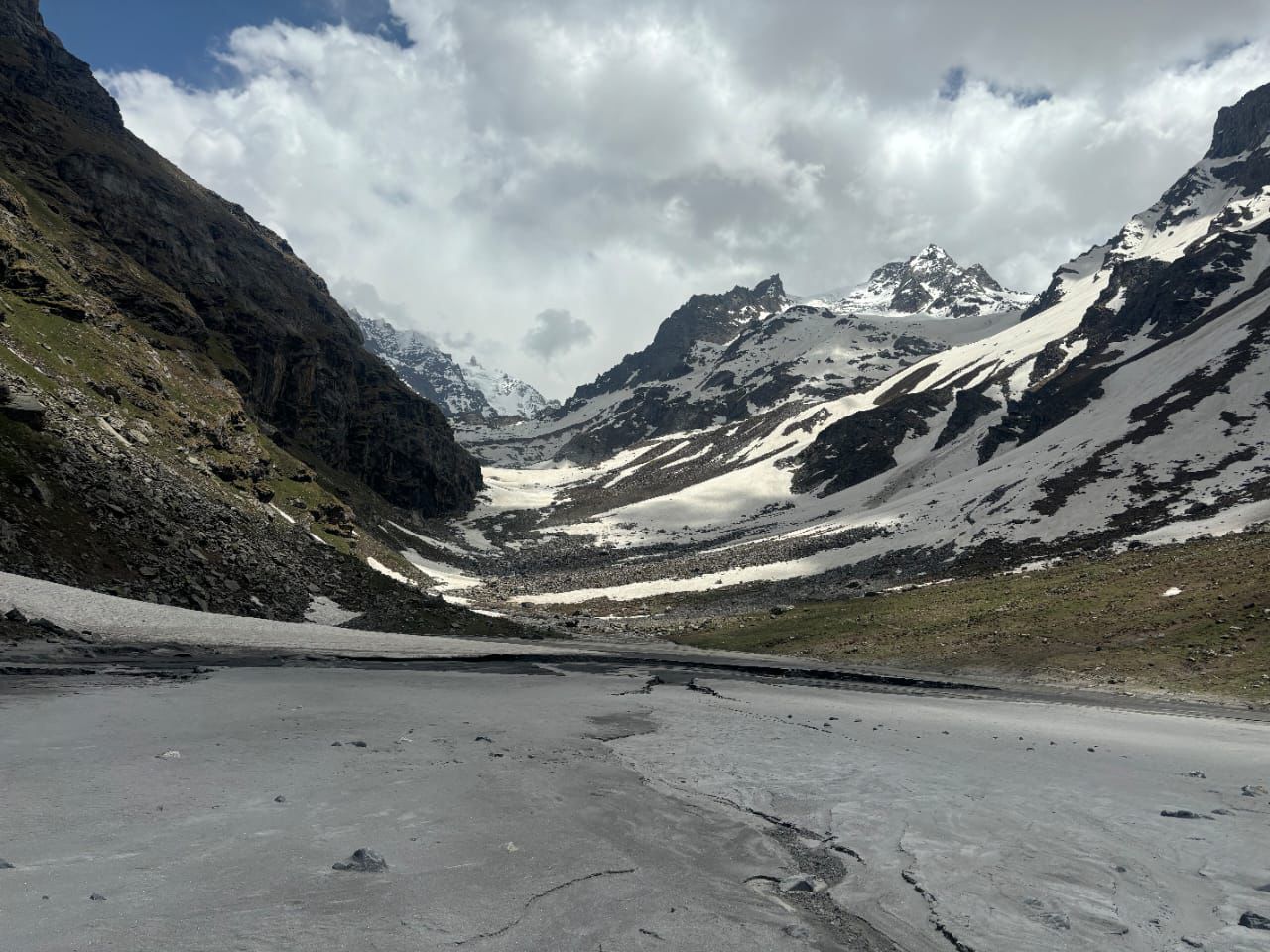
After all the warnings, all the uncertainty and all those steps, Roseleen’s reaction was almost comically understated: “Bas… hum pahunch gaye” — that’s it, we’ve made it. Then came the laughter, the photographs and the celebration. Everyone was happy, everyone was taking pictures, and the woman who had been asked more than once whether she could continue had just crossed Hampta Pass.
The Hardest Part Was Still Waiting
Reaching the highest point isn’t always the end of the difficult part. For Roseleen it was almost the opposite: the descent was harder. The trail down felt unfamiliar, flocks of sheep and goats crowded sections of the path, and at one point she slipped. Somewhere on that descent, her confidence began to shake. Her feet hurt, blisters had formed, and her body was tired.
There was another pressure too: time. The group needed to reach Chatru by a set hour because some trekkers were continuing to Chandratal. Roseleen had already seen Chandratal and wasn’t going, but she still had to reach camp. At one point she told Vijay she wasn’t sure she could make it in time. She knew she would get there eventually — the question was whether she would get there on time. For perhaps the first time on the trek, the mountain wasn’t the only thing she was up against. She was racing the clock, and the growing tiredness in her legs. Still, she walked.
4 PM at Chatru
The group was expected at Chatru by 5 PM. Some of the younger trekkers arrived around 3:30. Roseleen walked in at about 4 PM — after the steep climb, the pass, the descent, the slip, the blisters and the moments of doubt — with an hour to spare.
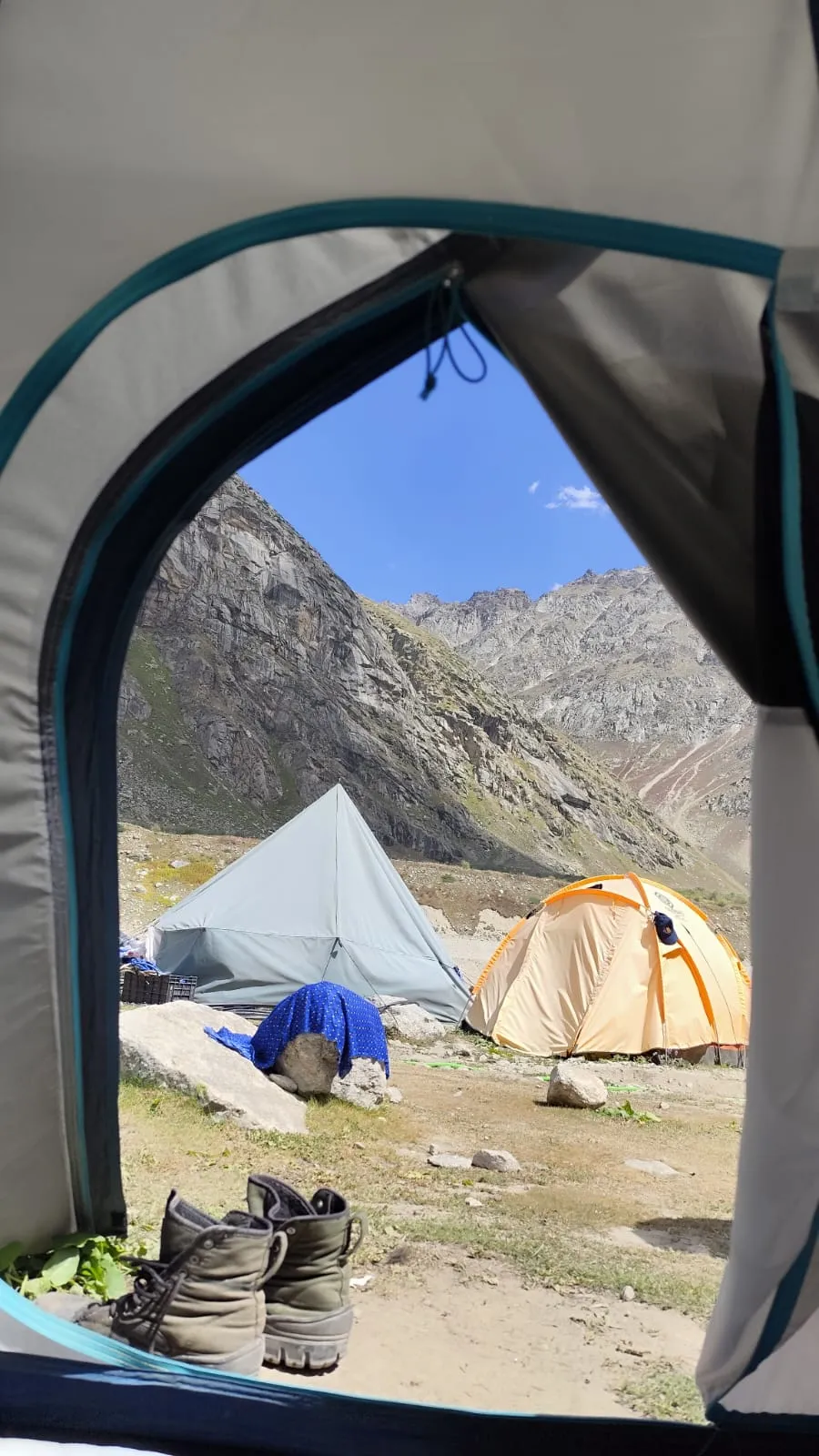
Chatru had one more surprise in store: cold, and very strong winds that battered the tents. The group managed anyway, and then, after days of walking, something wonderfully ordinary happened — they danced. For a while at the campsite, the mountains weren’t about endurance any more. They were about laughter and celebration.
The group had trekkers from Gujarat, Kerala and many other parts of the country. There were language differences, but they didn’t matter. People helped one another, waited for one another, and somewhere along the trail a group of strangers had become a team.
Her First Thought at Camp
It wasn’t poetic or philosophical. It was beautifully honest:
“Bas, tent mil jaye aur main jaakar so jaun.”
I just want to find my tent and go to sleep.
She was exhausted and extremely thirsty. She had been careful with water on the trail, since drinking a lot meant frequent bathroom stops, so now that she had arrived she finally drank properly. Then she went to her tent. She couldn’t actually sleep, but she lay down anyway — and after everything she had walked through, just lying there felt like enough.
What Hampta Pass Taught Her
Once the tiredness faded, Roseleen began to understand what Hampta Pass had really given her. Not just photographs, and not just another trek ticked off a list, but a new sense of what difficulty means:
“Ab mujhe pata laga ki easy kya hota hai aur moderate kya hota hai.”
Now I know what easy really means, and what moderate really means.
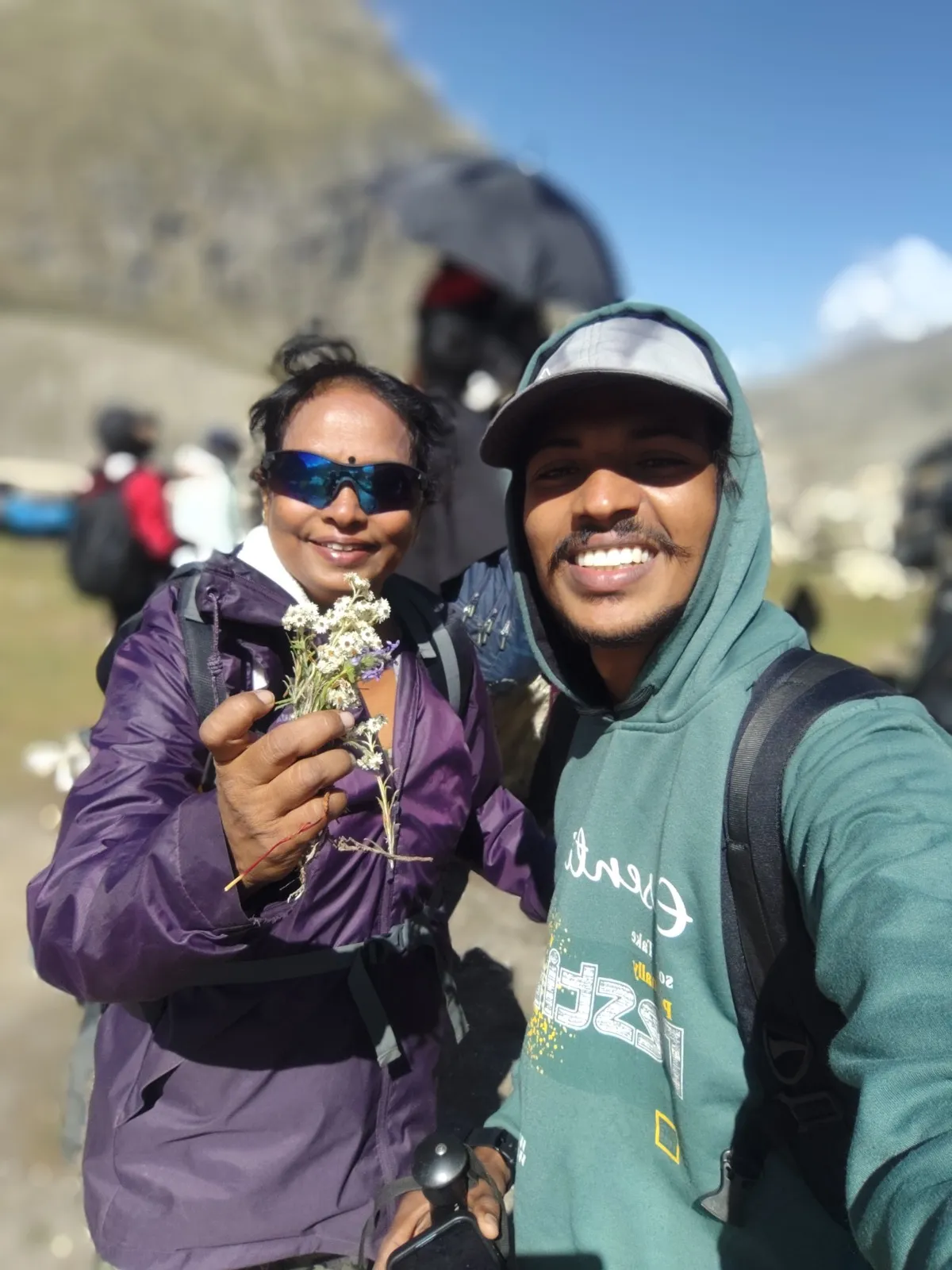
The trek had reset her scale. What once felt difficult now had a new reference point. She also believes that if she ever returns to Hampta Pass, she will find it easier — not because the mountain will change, but because she will know it. She will know the trail, the steep sections and what the descent feels like. Sometimes, knowing what lies ahead is exactly what gives you the confidence to keep moving.
Maybe This Was Never About Age
It’s easy to make this a story about one number, 59. But that may not be the point. The mountain doesn’t ask your age, how many birthdays you’ve had, or whether you’re the youngest in the group. It simply asks you to take the next step, and then another.
Roseleen had moments when others doubted her and moments when she doubted herself. There was a steep climb, a difficult descent, a slip, blisters, exhaustion and a deadline — and still, she kept walking.
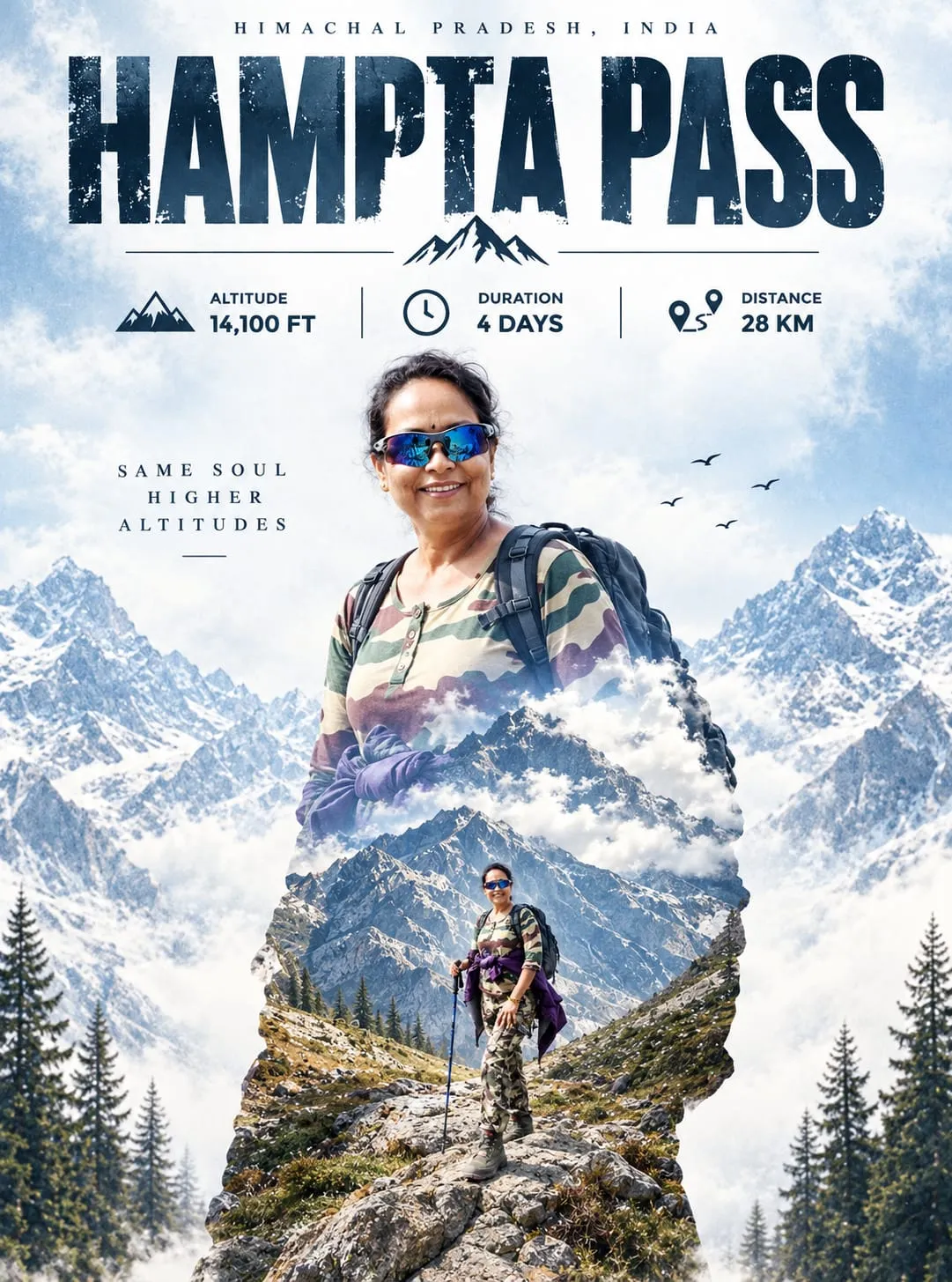
Perhaps the most powerful moment of her journey wasn’t reaching the pass at all. It was at Balu Ka Ghera, when the trek leader who had been unsure of her looked at her and said she was perfectly fit for this trek. By then, Roseleen didn’t need anyone else to answer the question. She had already started answering it herself.
That is what makes her journey worth remembering — not that she was 59, and not that she completed one more trek, but that she refused to let a number decide where her footsteps would stop.
Sometimes the mountain isn’t testing how strong you are. It’s simply waiting to see whether you’ll take one more step.
Roseleen did. And the rest of the mountain became her story.